Jared
Subscription · 29 to 32 · first home
“I don’t want a project. I want it handled, and I want the difference back in my pocket every month.”
Can’t afford to own yet and doesn’t want the admin. He works from home, so an outage is lost income.
Case study 02 / 04
The short version
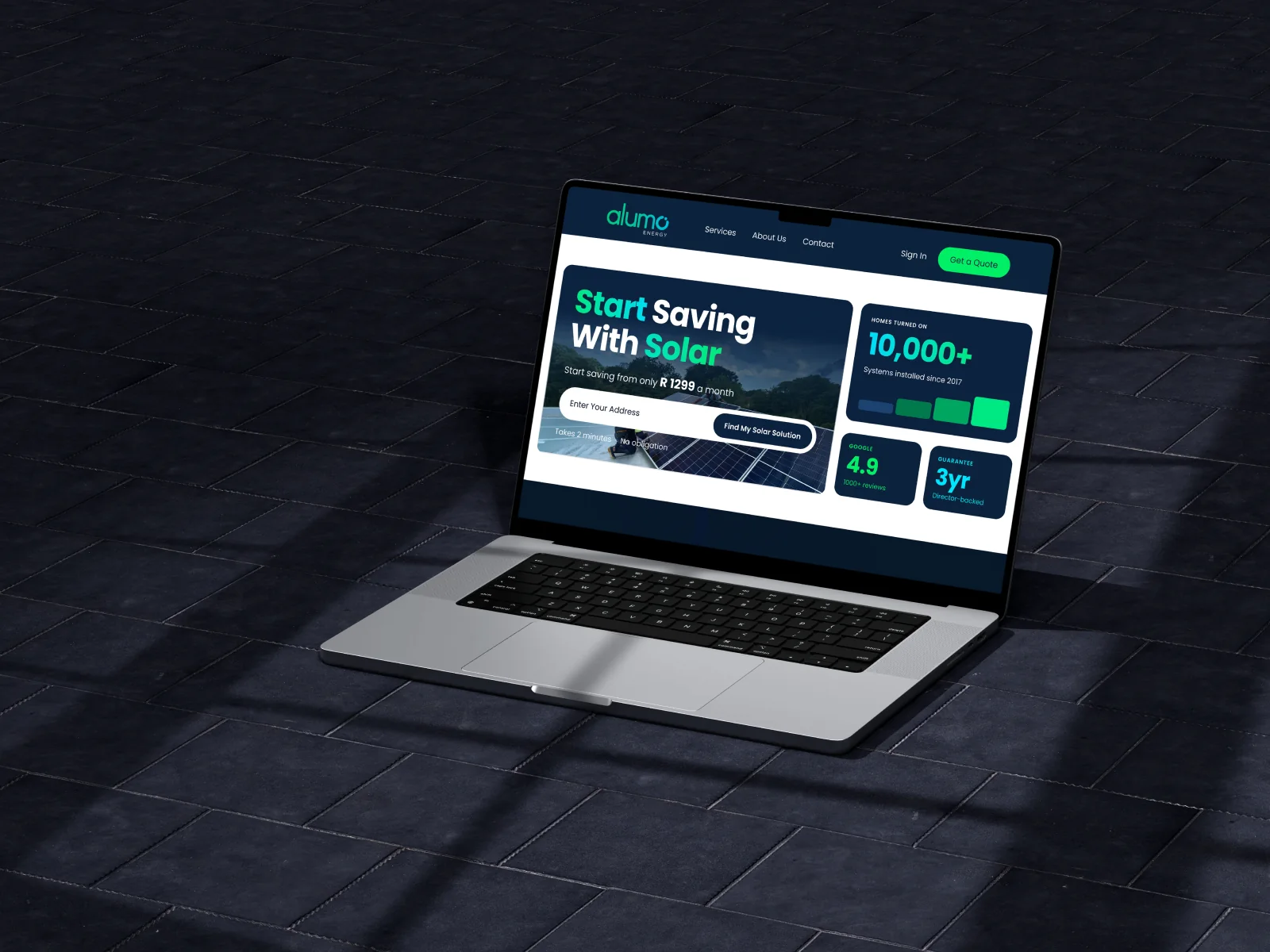
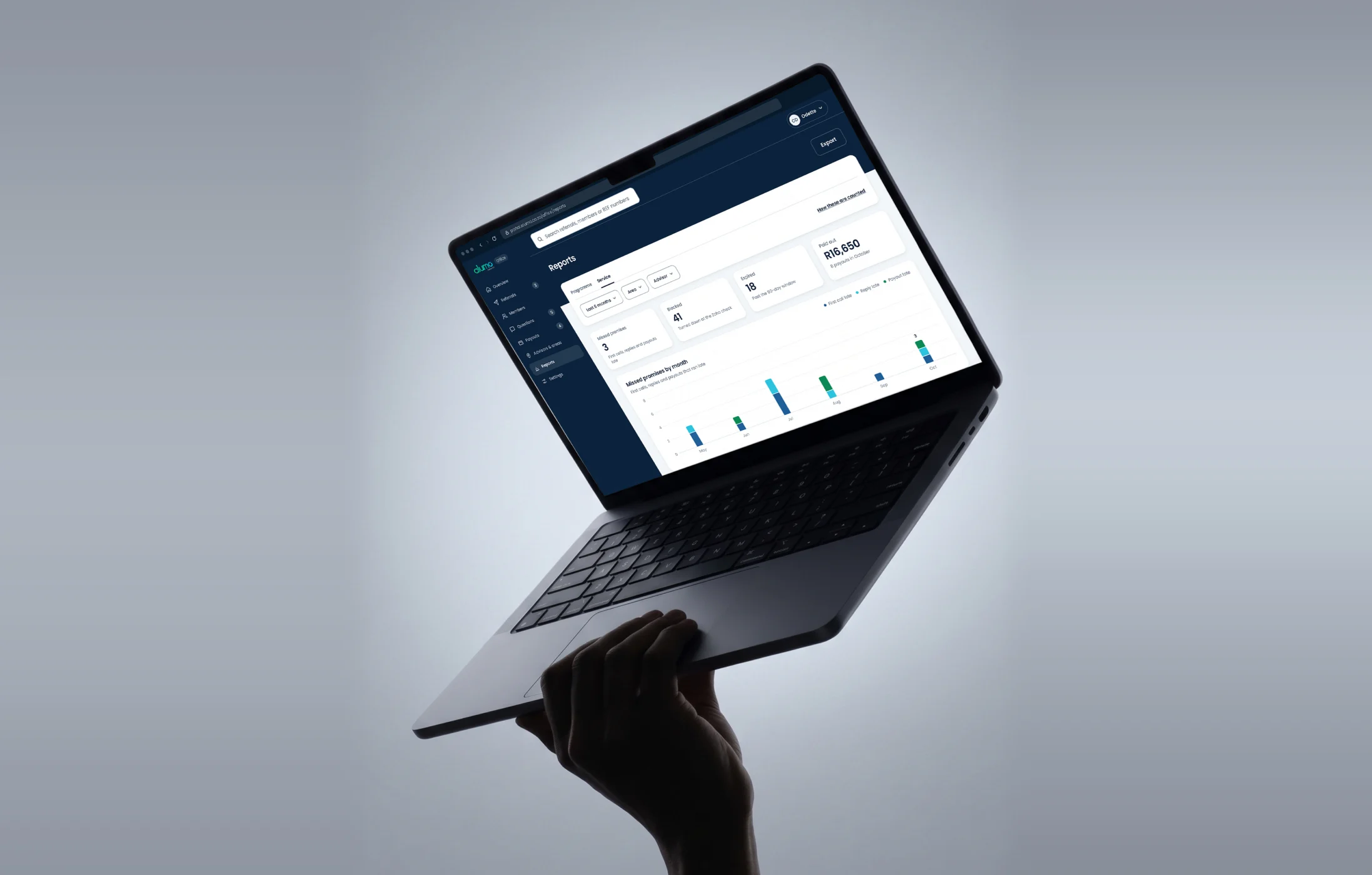
Alumo launched solar on subscription with a self-serve portal. I owned it from discovery through wireframes, then kept designing after launch, using session recordings to find where people stalled. The portal hit its 1% conversion target, and the new design has since brought in 250 leads.
1%
conversion target hit for the quarter
250
leads since the new design went live
44%
of all Alumo enquiries
390
customers and prospects surveyed
01
The brief
Alumo was launching solar on subscription and wanted people to sign up on their own: enter an address, get qualified, see a recommended package, pass a soft credit check, sign, pay and book a site assessment.
I owned the portal from discovery through wireframes. The catch was that we were designing for a product almost nobody had bought yet. Only 13 of the 312 customers we surveyed were on subscription.
The seven steps of the self-serve journey. Spoiler: step three is where it went wrong.
02
The people
We surveyed 312 customers and 78 prospects, then put the results next to the team’s whiteboard sessions. Three personas came out of it.
Where a claim came from survey evidence, it was marked. Where it was a working assumption, that was marked too, so we always knew what still needed testing.
Subscription · 29 to 32 · first home
“I don’t want a project. I want it handled, and I want the difference back in my pocket every month.”
Can’t afford to own yet and doesn’t want the admin. He works from home, so an outage is lost income.
Subscription · late 40s to early 50s
He isn’t buying cheap solar. He’s buying not being responsible for it.
Could buy a system outright tomorrow and actively doesn’t want to. The biggest predictor of an unhappy customer was being hard to reach, so a fast response is his whole proposition.
Rent-to-own · 45
He wants the asset, not the outcome.
208 of the 312 customers surveyed are on rent-to-own, so Steve is the persona with the most evidence behind him.
The survey finding that changed the ads
It isn’t what they choose when they have to trade features against each other. Asked to rank 33 features, people put certainty ahead of cheapness. “No deposit or setup fee” only came 6th.
03
Month one
After a month live we reported to leadership in four parts: spend, traffic and conversion, friction, and the build. My part was friction, and the numbers set it up: lead generation at 0.5% against a 1% target for the quarter, and a full-funnel conversion of zero.
Four leads is too small a sample to call a trend, so I didn’t. The zero was the number worth watching, because someone who finishes the journey carries real buying intent.
Month one, after launch
04
Where they stalled
I watched the session recordings and sorted people by intent: high, moderate and low. Drop-off converged on the pricing and package step in every tier.
I pinned each friction point to the step where it happened, then wrote it the same way every time: what people did, where, why it mattered and the opportunity. A friction point on its own is a complaint. Pinned to a step, it’s a diagnosis.
The gross monthly price outweighed the saving, so people met a big number before they met a reason to pay it.
People had to pay before anyone had looked at their roof. A real barrier for moderate and high-intent users.
People tapped footer links and buttons that led nowhere while the MVP was still being built.
Before: price first
After: saving first
A schematic of the change, not the live screen. Same information, new order of importance.
05
What we changed
The saving now comes before the price. The paywall before the site visit is gone. Buttons and footer links that led nowhere were removed while the MVP is still being tested.
The pricing and paywall changes landed close together, so I reported the result as their combined effect. Claiming one change did it would have been a guess.
leads since the changes, against 4 in the whole first month
site assessments booked from those six
Spend less time choosing a package since the change.
Still click off at pricing. This is where the leak is now.
06
The ads
Competitor research turned up a near-identical system selling for slightly less, backed by heavy ad spend. Price-led creative couldn’t win that fight.
So the ads moved to what subscription can promise that a cheaper price can’t: low risk. A free site assessment, a money-back guarantee and someone accountable when something breaks. Jared and Abe needed different campaigns, because they buy for different reasons.
Every claim checked against Alumo’s product guide
24/7/365 support team
30-year panel guarantee
Free repairs on subscription
Cut. None of these could be backed by the guide, and one was simply wrong: subscription repairs carry an after-sales charge.
What replaced them
3-year workmanship guarantee
10-year battery and inverter warranty
Four real, named customer reviews
Every replacement comes straight from the guide. Placeholder testimonials came out too.
07
The impact
From 0.5% in month one to the quarter’s 1% conversion goal. It got there through quick changes to targeting and design, and close watching of how people actually used the portal.
The new website design I worked on with our developer has since brought in 250 leads, 44% of all Alumo enquiries.
08
The next iteration
Each of these runs on its own and long enough to credit any lift to one cause.
Ads that show pricing up front, so people arrive at the pricing step already primed on cost.
Show each customer why their recommended package matches the bill they entered.
Move add-ons out of the moment people choose a package.
Show the R999 initiation fee early, so the ads never recreate the pricing ambush.
Stop paying for clicks that can’t convert: 21 of 74 prospects had bills below what the cheapest package costs.
Next case study · 03
Alumo referral rewards
Read the case study →
Contact
Open to product design and UX roles, remote or in-house. The quickest way to reach me is email.
timothyenricomoses@gmail.com